



The Short Answer
Yes, in most cases. A walk-in or curbless shower qualifies for the federal Home Accessibility Tax Credit (HATC) when it's built for someone who is 65 or older (at the end of the year) or eligible for the disability tax credit, and it makes the bathroom safer or easier for them to use.
The HATC is worth 14% of up to $20,000 in eligible expenses per year for 2026, or up to $2,800 off your federal tax. It's non-refundable, so it only reduces tax you owe.
We're renovation contractors, not accountants. This is how the credits apply to the projects we build, current as of September 2026. Confirm your own claim with your accountant or the CRA.
The CRA's Test
The CRA doesn't publish an approved product list. Instead, every renovation has to pass a two-part test:
- It's "of an enduring nature and integral to the dwelling." It's built in, not something you can pick up and take with you.
- It helps the person get into, move around or function in the home, or reduces their risk of harm there.
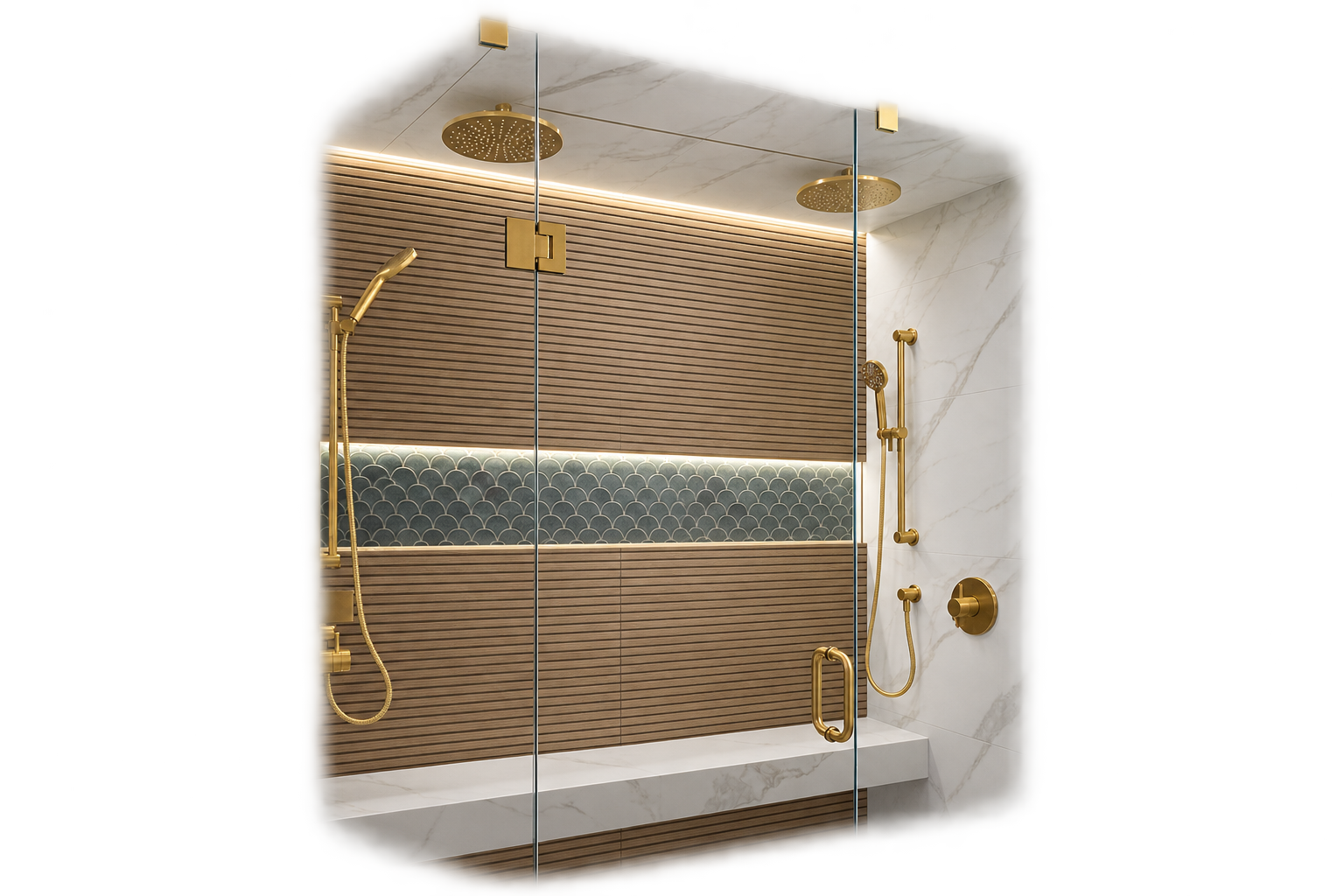
A walk-in shower passes both. Stepping over a tub edge is one of the most common ways seniors fall at home, and a low- or zero-threshold shower with a built-in bench and grab bars is a permanent part of the bathroom.
What sinks a claim is intent. The CRA excludes work done "mainly to increase or maintain the value of the dwelling." A spa-style shower in a 45-year-old's house is a renovation. The same shower for a 72-year-old parent who can no longer safely step into a tub is an accessibility renovation.
What Qualifies Around a Shower Conversion
On a typical tub-to-shower conversion for an older client, here's how the line items usually fall:
| Usually eligible | Usually not eligible |
|---|---|
| Removing the tub and building a low- or zero-threshold shower | A shower chair or transfer bench you can move |
| Linear drain, sloped floor and waterproofing | Towel warmers and decorative upgrades |
| Built-in bench and fixed grab bars (plus blocking in the walls) | Replacing a vanity just for looks |
| Slip-resistant floor tile | Annual or routine repairs |
| Wall-mounted handheld shower on a slide bar | Financing and interest |
| Widening the bathroom door | Your own labour or tools |
| Permits, drawings and contractor labour | Work by a relative not registered for GST/HST |
Rough GTA costs for the projects that come up most:
- Tub-to-walk-in-shower conversion: $12,000 – $25,000
- Fully curbless (roll-in) shower, including floor work: $18,000 – $35,000
- Grab bars, installed with blocking: $250 – $600 each
- Widening a doorway: $1,500 – $4,000
Most accessible bathroom renovations land under the $20,000 annual cap. For a bigger project, costs are counted in the year they're paid, so spreading the work across two tax years can let you claim up to $20,000 in each.
Who Can Claim It
The credit belongs to the qualifying individual, the person who is 65+ or eligible for the disability tax credit. But an eligible individual can claim it too: a spouse, or a relative like an adult child who supports them. The claim can be split between them. That's useful when a retired parent owes little tax and a working child can use the credit.
The home must be owned by one of them and be where the qualifying individual normally lives. A condo counts, and so does your share of accessibility work in common areas.
Stacking It With Other Credits
- Medical expense tax credit. If the person has a severe and prolonged mobility impairment, the same shower can often be claimed as a medical expense and under the HATC. This is one of the rare cases where the CRA allows double-counting.
- Multigenerational Home Renovation Tax Credit. If the shower is part of a new secondary suite for a parent, it could go under the MHRTC instead, but not both. See how to split costs between the two credits.
- Ontario. The HATC is federal only. Ontario's Seniors' Home Safety Tax Credit ended after 2022, so there's no provincial equivalent to add on top today.
Paperwork to Keep
You don't send receipts with your return, but keep them in case the CRA asks:
- An invoice showing the contractor's name, address and GST/HST number
- A description of the work and the dates it was done
- Proof of payment: a receipt, credit card slip or cancelled cheque
We itemize our invoices on accessibility projects so the eligible work is clearly separated from anything that isn't.
Planning an Accessible Bathroom?
Our team has ADA design training in-house, and accessible bathrooms are the most common aging-in-place renovation we build across Toronto and the GTA. Get a quote and we'll walk through the layout, the cost and what's likely to qualify.